If you’re getting ready to build — a home, a shop, a driveway, or a full commercial pad — grading is usually one of the first questions that comes up: what’s this actually going to cost?
The honest answer is that site grading cost in Southwest Florida depends on more variables than most homeowners or contractors expect. There’s no single flat rate that applies across Lee, Charlotte, Collier, and Hendry counties, because every lot brings its own combination of soil, drainage, and access challenges. Here’s what actually drives the price, so you know what you’re being quoted for and why.
What Affects Site Grading Cost
Lot size and scope. Grading a quarter-acre residential lot is a different job than prepping several acres for a commercial pad or a subdivision. Larger sites mean more equipment time, more material movement, and more days on-site — all of which factor into the final number.
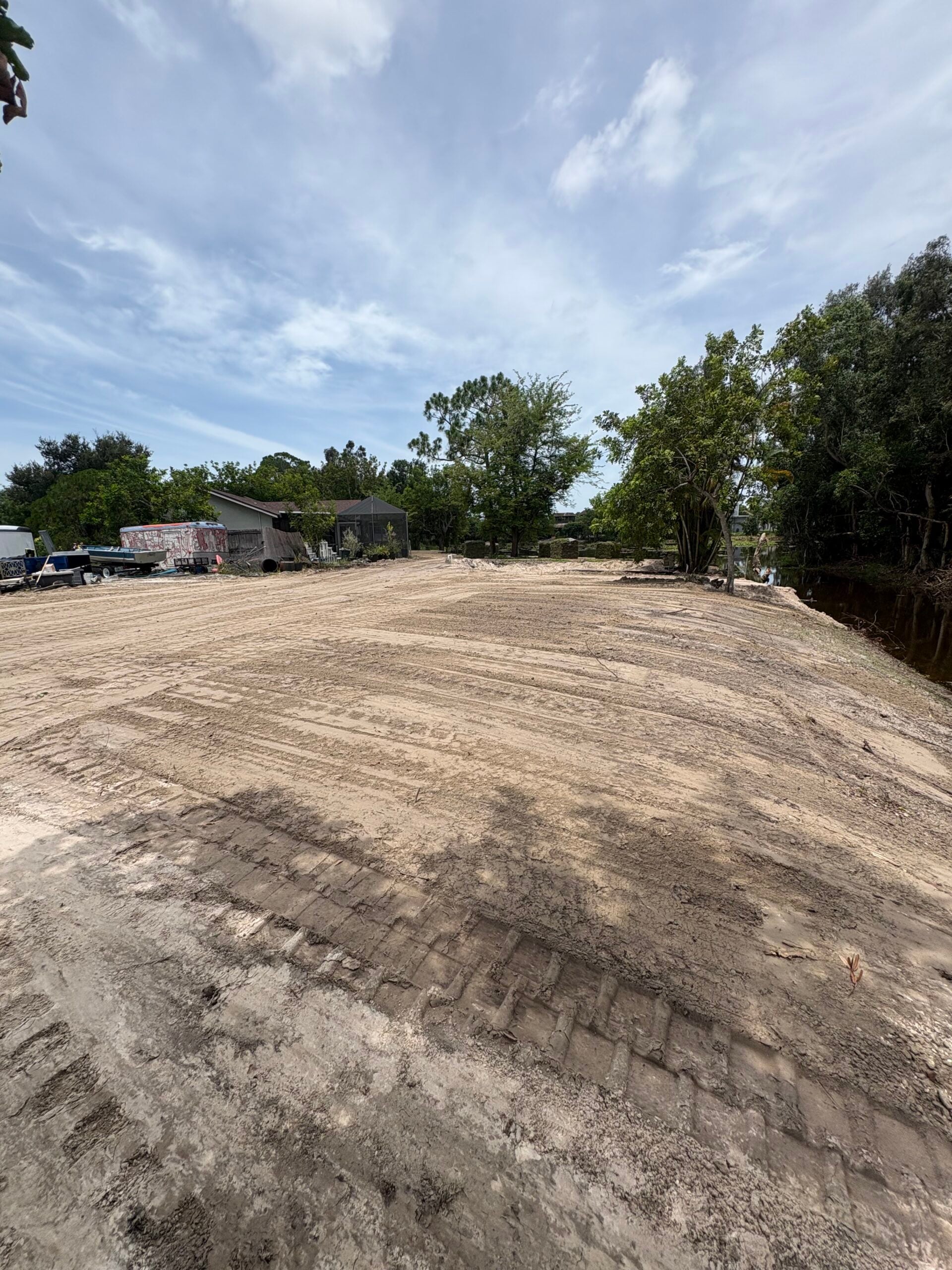
Current condition of the land. A lot that’s already been cleared and is relatively flat costs less to grade than one with heavy vegetation, uneven terrain, or standing water. If land clearing hasn’t happened yet, that’s typically priced as a separate step before grading begins.
Soil type and drainage needs. Southwest Florida’s sandy, low-lying terrain often needs specific grading work to manage stormwater and meet local drainage requirements. Sites that need additional fill material, compaction, or swale work will run higher than sites that don’t.
Access for equipment. Tight lots, long driveways, or sites with limited road access can slow down equipment mobilization and add time to the job — which affects cost.
Local permitting and engineering requirements. Depending on the county and the project type, grading may need to follow an engineered site plan or meet specific elevation and drainage standards. Projects with more regulatory steps generally take more planning time.
End use of the site. Prepping a pad for a home build, a commercial building, or a gravel driveway all call for different finish grades and tolerances, which changes the labor and equipment involved.
Why “Per Acre” Pricing Rarely Tells the Whole Story
You’ll sometimes see grading quoted as a per-acre or per-square-foot number online. Treat those as a rough starting point, not a real quote. Two lots the same size in the same county can have very different grading costs once you factor in existing vegetation, soil conditions, drainage design, and how the finished pad needs to sit relative to the surrounding grade. The only way to get a number you can actually build a budget around is a site visit.
Getting an Accurate Estimate
Because grading costs are so site-specific, the most reliable way to find out what your project will cost is a walk of the property. That lets us look at the current condition of the land, talk through what you’re building, and account for drainage and access before putting a number in front of you — so there aren’t surprises once work starts.
Site Grading FAQ
Does site grading include land clearing? Not usually — land clearing (removing trees, brush, and debris) is typically priced and scheduled as its own step before grading begins, especially on wooded or overgrown lots.
How long does a typical grading job take? Timelines vary with lot size and site conditions, but most residential grading projects move quickly once equipment is mobilized. Larger commercial sites take longer due to scope and drainage requirements.
Do I need a permit for site grading in Southwest Florida? It depends on the county, the project size, and whether the work affects drainage or elevation in a way that requires an engineered plan. We can help walk through what your specific project needs.
Can grading fix drainage problems on my property? In many cases, yes. Proper grading directs water away from structures and toward appropriate drainage paths, which is often part of the scope on both new builds and existing-lot corrections.
Ready to find out what your project will actually cost? Request a free site grading estimate and we’ll walk your property in Lee, Charlotte, Collier, or Hendry County and give you a real number — not a guess.