If you’re building a new home in Southwest Florida, you’ll hear the term “building pad” early in the process. So, what is a building pad? It’s the leveled, compacted, and usually raised area of soil that your home’s foundation is built on. It’s one of the least visible parts of a new home, and one of the most important.
What a Building Pad Does
- Supports the foundation. A properly compacted pad gives the slab a stable base so it doesn’t settle or crack.
- Raises the home. In flood-prone areas, the pad lifts the finished floor to the elevation required by your county and flood zone.
- Moves water away. The pad and surrounding grades direct rainwater away from the house.
How a Building Pad Is Built
- Clearing and stripping. Vegetation, roots and organic topsoil are removed from the footprint. Organic material decomposes over time, so it can’t stay under a slab. See our land and lot clearing service.
- Fill placement. Clean fill is brought in and spread in layers, called lifts.
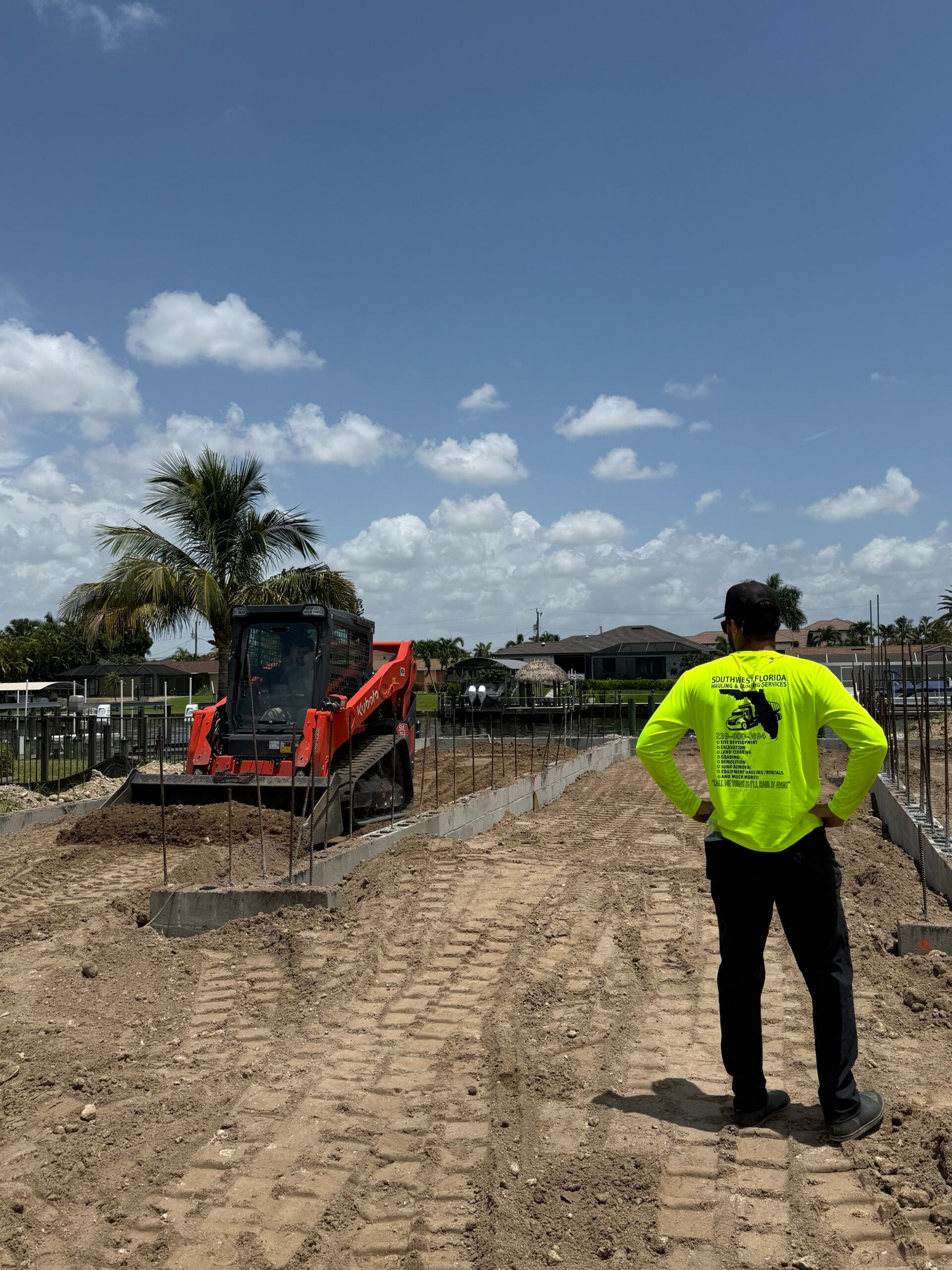
- Compaction. Each lift is compacted with heavy equipment before the next goes down, until the pad reaches the required density.
- Shaping and elevation. The pad is graded to the exact size, height and slopes on the site plan.
- Testing. Builders often require compaction tests to confirm the pad meets specification before forming the foundation.
Why Elevation Matters in Southwest Florida
Much of our area sits low and flat, and many lots are in FEMA flood zones. Counties set a minimum finished floor elevation, and the pad has to get the home there. That often means bringing in a significant amount of fill, which is why fill hauling is a big part of many pad jobs. Learn about our material hauling and delivery.
Why Compaction Matters
Loose fill settles over time. If a pad isn’t compacted in proper lifts, the slab above it can settle unevenly, causing cracks in floors, walls and tile. Doing the compaction right the first time is far cheaper than fixing a settling foundation later.
Signs of a Poorly Built Pad
- Soft spots or visible settling before construction starts
- Water ponding on or right next to the pad after rain
- Organic material, roots or debris mixed into the fill
- No compaction testing when the builder requires it
Building Pads From One Crew
Southwest Florida Hauling & Dumping handles the whole sequence: clearing, fill delivery, grading, compaction and building pad prep. We work from your builder’s plans to hit the right elevation and size. For the full process from raw land to a build-ready lot, read how to prepare a lot for building.
Frequently Asked Questions
How high does my building pad need to be?
Your county and flood zone set the minimum finished floor elevation. Your survey and site plan show the exact number.
What type of fill is used for a building pad?
Clean, compactable fill free of organic material and debris. Your builder or engineer may specify the material.
How long does pad prep take?
Many residential pads are completed within days once clearing is done, depending on fill volume, weather and testing.
Need a building pad? Call Southwest Florida Hauling & Dumping at (239) 600-0894 or request a free estimate.