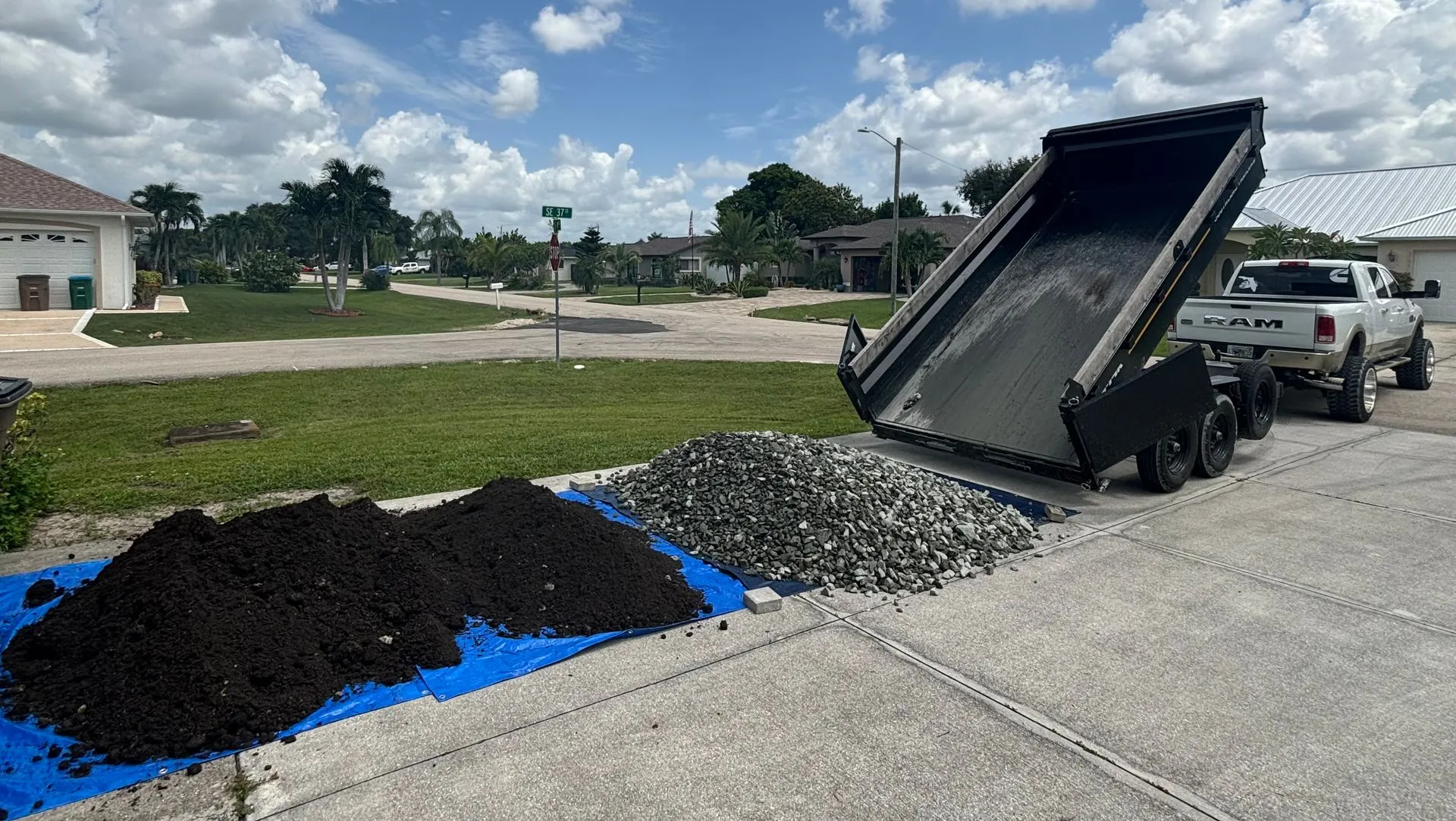
Whether you’re raising a building pad, leveling a yard or building a driveway, the material you order matters. One of the most common mix-ups we see is fill dirt vs. topsoil. They look similar in a truck, but they do completely different jobs. Here’s a quick guide to the materials used most in Southwest Florida site work.
Fill Dirt
What it is: Subsoil with little or no organic material. In our area, it’s usually sandy.
Best for: Raising elevation, building pads, filling low spots and holes, backfilling pools and trenches.
Why it works: Because it has almost no organic matter, it compacts well and won’t decompose and settle over time. That’s exactly what you want under a slab or driveway.
Not for: Growing grass or plants on its own. It doesn’t hold nutrients well.
Topsoil
What it is: The upper, nutrient-rich layer of soil with organic material.
Best for: Lawns, sod, gardens and landscaping, usually as a top layer a few inches deep.
Why it works: The organic content feeds plants and holds moisture.
Not for: Anything structural. Organic material breaks down and compresses, so topsoil should never go under a foundation, pad or driveway.
Shell Rock
What it is: Crushed shell and limestone material common in Florida.
Best for: Driveway bases, parking areas, construction entrances and stabilizing soft ground.
Why it works: It compacts into a firm, durable surface that handles vehicle traffic and drains reasonably well.
Gravel and Crushed Rock
What it is: Crushed stone in various sizes.
Best for: Driveway surfaces, drainage areas, and anywhere you want water to pass through quickly.
Why it works: Larger stone allows drainage; smaller, angular stone locks together for a firmer surface. Learn about our gravel driveways and lot surfacing.
Quick Guide: Which Material Do You Need?
- Building pad or raising a lot: fill dirt
- Filling in a pool: fill dirt, compacted in lifts
- New lawn or sod: topsoil over a graded base
- Driveway base: shell rock or crushed rock
- Drainage area or French drain: washed gravel
How Much Do You Need?
Material is usually ordered by the cubic yard or by the truckload. To estimate, multiply the length, width and depth of the area in feet, then divide by 27 to get cubic yards. Fill also compacts, so you typically need more than the raw volume suggests. We’re happy to estimate it for you.
Delivered and Placed by One Crew
We don’t just drop a pile in your driveway. Southwest Florida Hauling & Dumping delivers fill, rock and aggregate through our material hauling and delivery service, then spreads, grades and compacts it with our grading and site prep crew. For new homes, see what goes into a building pad.
Frequently Asked Questions
Can I use fill dirt to grow grass?
Grass struggles in plain fill. Put a layer of topsoil over the fill before seeding or laying sod.
Is shell rock good for a driveway?
Yes. Shell rock is a popular, affordable driveway base in Southwest Florida and compacts into a firm surface.
How many cubic yards fit in a dump truck?
It depends on the truck. Ask us when you order and we’ll match the truck to your project.
Need fill, rock or gravel delivered and placed? Call (239) 600-0894 or request a free estimate.